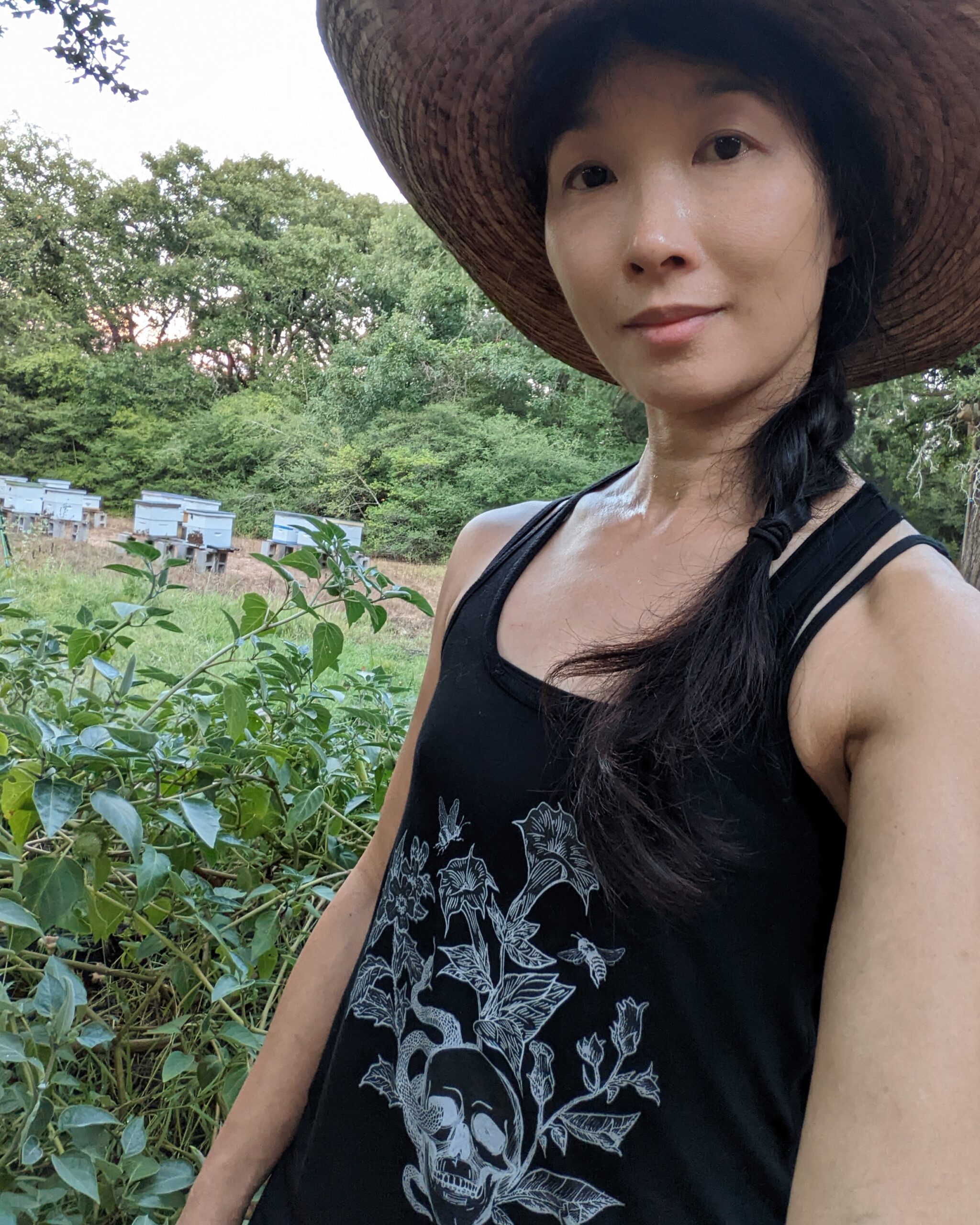
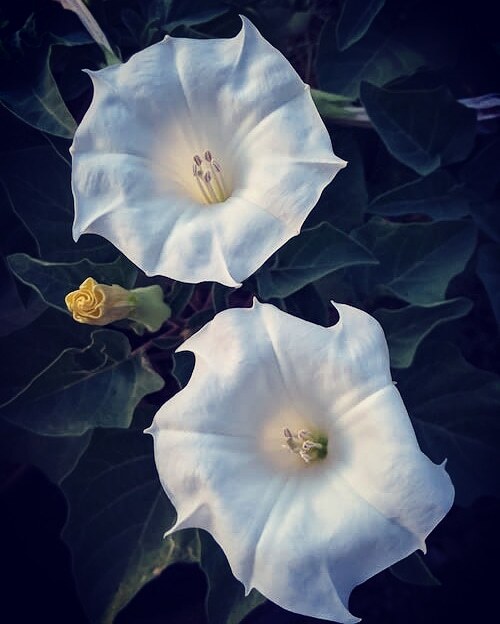
If you had asked me two years ago about daturas, I would have no clue what you were talking about – I hadn’t even heard of such flora… The first time I heard of daturas was from a fellow witch, when she was showing off her Sacred Datura plant photos. What peaked my interest was the mentioning of the plant being very poisonous. The idea of something so beautiful yet so deadly excited me. When I actually came across some datura bushes in the wild while hiking in Utah, that almost became a sign that I am destined to have a relationship with the poisonous beauty.
Sacred Datura / Datura wrightii
After the encounter in the wild, I searched for Sacred Datura seeds to grow some poison beauties of my own. According to general internet consensus, Datura wrightii is what’s commonly known as Sacred Datura [1][2]. So I got myself some Datura wrightii seeds.
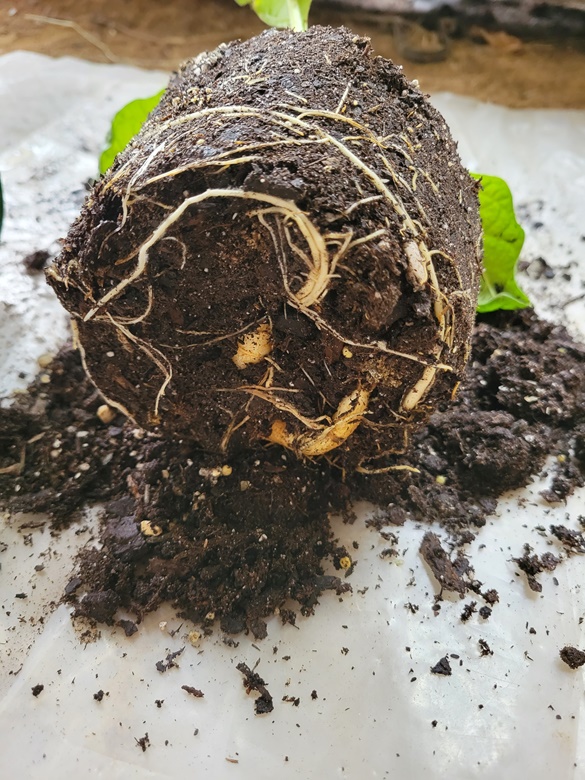
I soaked the seeds overnight in room temperature tap water before planting, and kept the planting medium moist but not soaking wet. Because I read that daturas do not like being transplanted or getting their roots disturbed, I sowed the seeds in rich garden soil in peat pots. When it came time to transplant the seedlings, I just planted the whole peat pots.
It was April in Texas when I started the seeds, so the temperature were in the range of 70s to low 80s F. It took about 4 weeks for the first seed to germinate, then several more followed in the next couple of weeks. Germination was definitely sporadic. Of all the seeds I planted, about 50% germinated, and I ended up having 9 datura plants total (not all seedlings made it to adulthood).
Over the course of the next 2 months, the datura plants grew and flourished. I watered the seedlings regularly when they were tiny; as they grew into adult plants, I only watered them as the plants indicated to me they needed water – droopy foliage and general sad posture. By the end of July, the first few buds started to appear. I was beyond excited as I watched these flower buds grew bigger and taller, and took photos of every stage of the blooms as it happened…
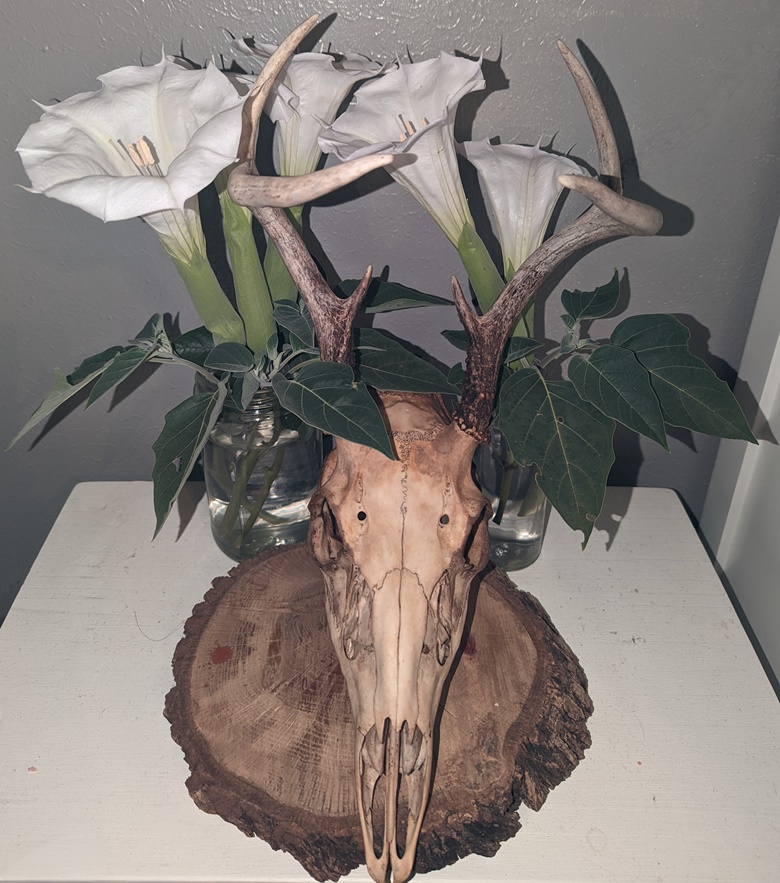
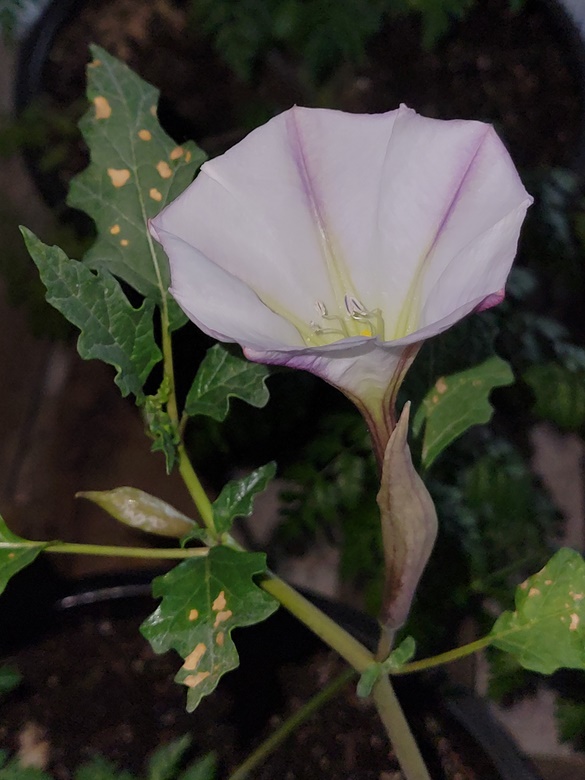
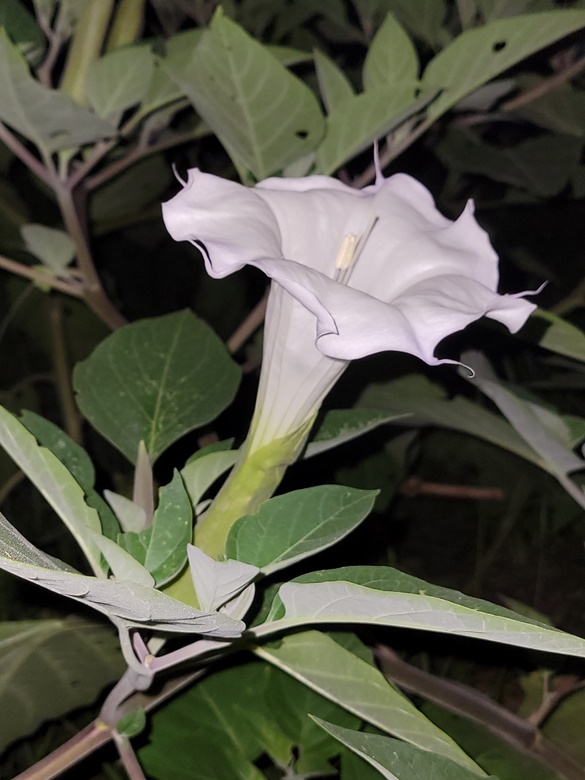
I documented the different stages of the datura plants as they grew. The blossoms were generally about 6 inches tall, with white fused petals that looked satiny and felt velvety. There were always a bit of a “glow” in the center of the flaring trumpet where five male stamens and a single female pistil sat. The blossoms usually bloomed at night, and their fragrance was intoxicating sweet, but never overpowering to me. I have heard the fragrance could cause headaches in some people, but I never experienced any. I didn’t sniff them non-stop either, usually just a quick whiff as I walked by the plants. The leaves, however, didn’t smell so good. They had a pungent, bitter scent that smelled like bad peanut butter sometimes.
By the middle of August, the datura blossoms were maturing into spiny fruits. When the fruits ripened, they bursted open and expelled the seeds. Each fruit contained tons of seeds. I ended up collecting several jars of them.
Some of the seeds collected look healthier than others. I save the healthiest looking ones for planting, and will use the others for magickal and medicinal purposes.I greatly treasured my first ever datura plants and tried to take care of them the best I can. However I made the fatal mistake of setting them in a plastic basin to ensure they would get continuous moderate watering while I went on a 2 week vacation. Unfortunately during that time, we had rain almost every single day and the plants ended up drowning. I wasn’t able to save the plants, but did manage to salvage the most of the seeds. I immediately planted some and started the next generation of daturas (I’ll post about them later). I also kept a few of the plant remains for magickal uses later. I have also named the plants – posthumously and collectively – White Rabbit, for they led me down the rabbit hole and to the wonderland of baneful herbs.
Datura wrightii or Datura innoxia?
Now all this time I thought I was growing Sacred Datura or Datura wrightii. But after some further research, I think I might actually have been growing Datura innoxia instead. There are a few reasons that led me to that conclusion:
1. Flower appearance. White Rabbit’s blossoms looked slightly different from the other Datura wrightii I have seen online. My flowers never had any lavender tint, and had 10 “teeth” at the rim, instead of 5 elongated ones [1].
2. Leaf appearance. I have noticed leaves of D. wrightii are slightly narrower, more triangular/pointier. D. innoxia leaves seem rounder. White Rabbit (and her offsprings) had rounder leaves. The leaf colors are also slightly different shades of green between the two species.
3. Overall plant appearance. D. wrightii tends to grow low to the ground and in a creeping manner. White Rabbit grew pretty upright and bushy [3].
Final Thoughts
I might never know which datura species I was actually growing, but I will continue to do my research to get more clarity. This is the main reason why I try to grow all the different datura species and Sacred Datura/Datura wrightii seeds from different suppliers. So I can make first hand observations and better understand the difference between them.
My experience with White Rabbit stirred my interest in baneful herbs and other poisonous plants. Having a “poison garden” of my own has certainly became a goal. The experience also gave me the confidence to venture onto growing other baneful herbs. It also gave me a focus on my herbalism studies, and a new direction on the witchcraft journey to embark on.
Regardless what datura I was and am growing, it is important to remember they are ALL poisonous. All parts of Datura plants contain dangerous levels of tropane alkaloids and may be fatal if ingested by humans, livestock, or pets [1]. ALWAYS handle Datura plants with care!
[1] “Datura wrightii“, Wikipedia
[2] “Datura wrightii“, North Carolina Extension Garden Plant Toolbox
[3] Christian Rätsch, The Encyclopedia of Psychoactive Plants: Ethnopharmacology and Its Applications (Park Street Press, 2005) ISBN-13:978-0892819782