Poison Plant Ally Profile:
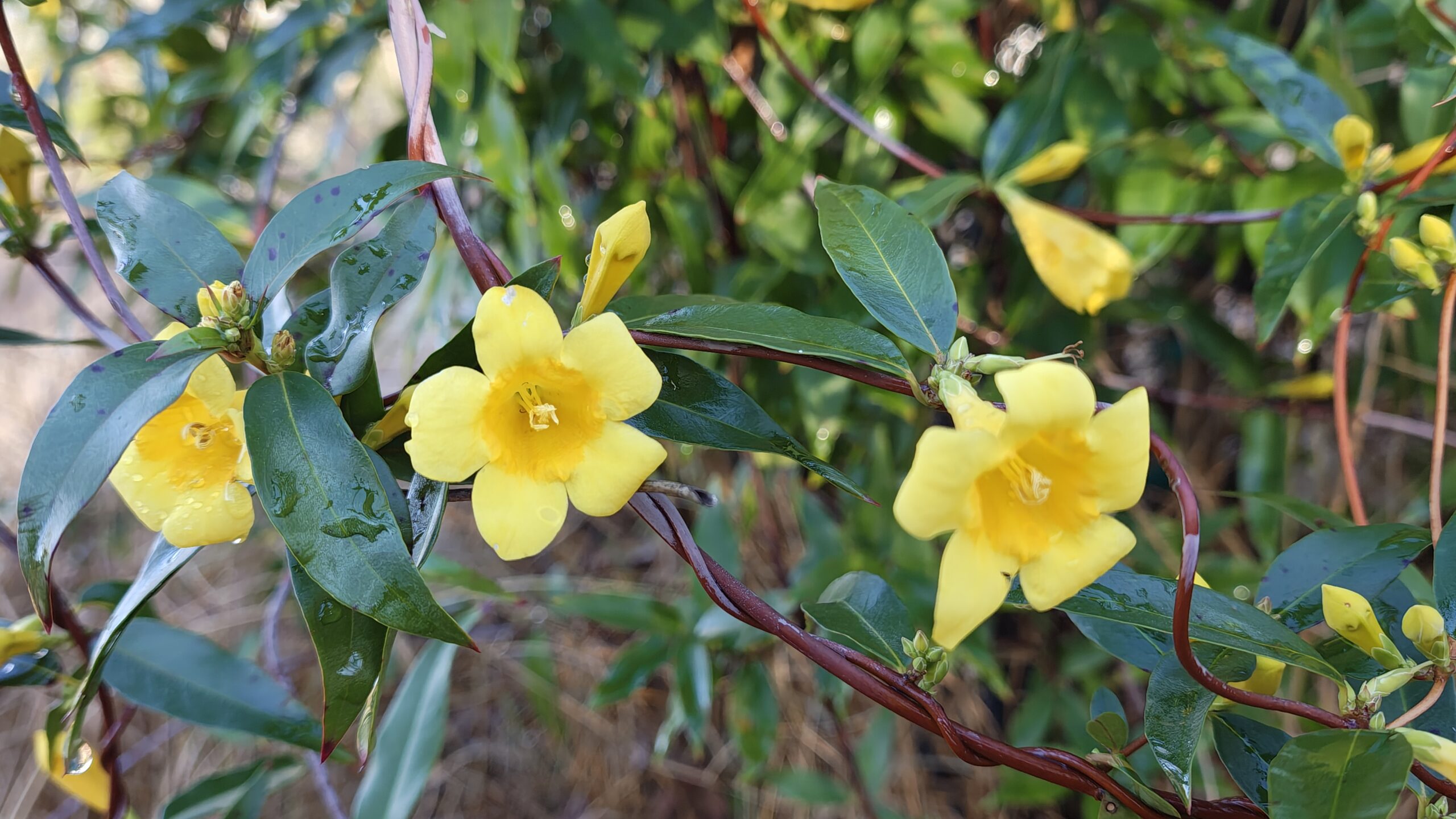
Carolina Jessamine
We are two-thirds of the way into January... Here in the Post Oak Savannah (a transitional ecological region in central and eastern Texas), this year's winter has been mild, thanks to La Niña... While the oak trees are still bare, lots of springtime vegetation is popping up already, and the landscape is unseasonably green in many spots...
My poison garden is looking pretty disheveled at the moment: All the garden beds are covered in dead grass and weed, and both Datura and Brugmansia are looking really sad with their bare stems and wilted leaves...
But there is one poison plant ally that is thriving.
The fragrant little yellow trumpet flower vine
Gelsemium sempervirens, commonly known as Carolina jessamine (or jasmine), Carolina Yellow Jessamine, evening trumpetflower, confederate jessamine (or jasmine), yellow jessamine, gelsemium, or woodbine. It is a perennial twining vine in the family Gelsemiaceae, native to subtropical and tropical America: Honduras, Guatemala, Belize, Mexico (Chiapas, Oaxaca, Veracruz, Puebla, Hidalgo), and southeastern and south-central United States (from Texas to Virginia).
Description
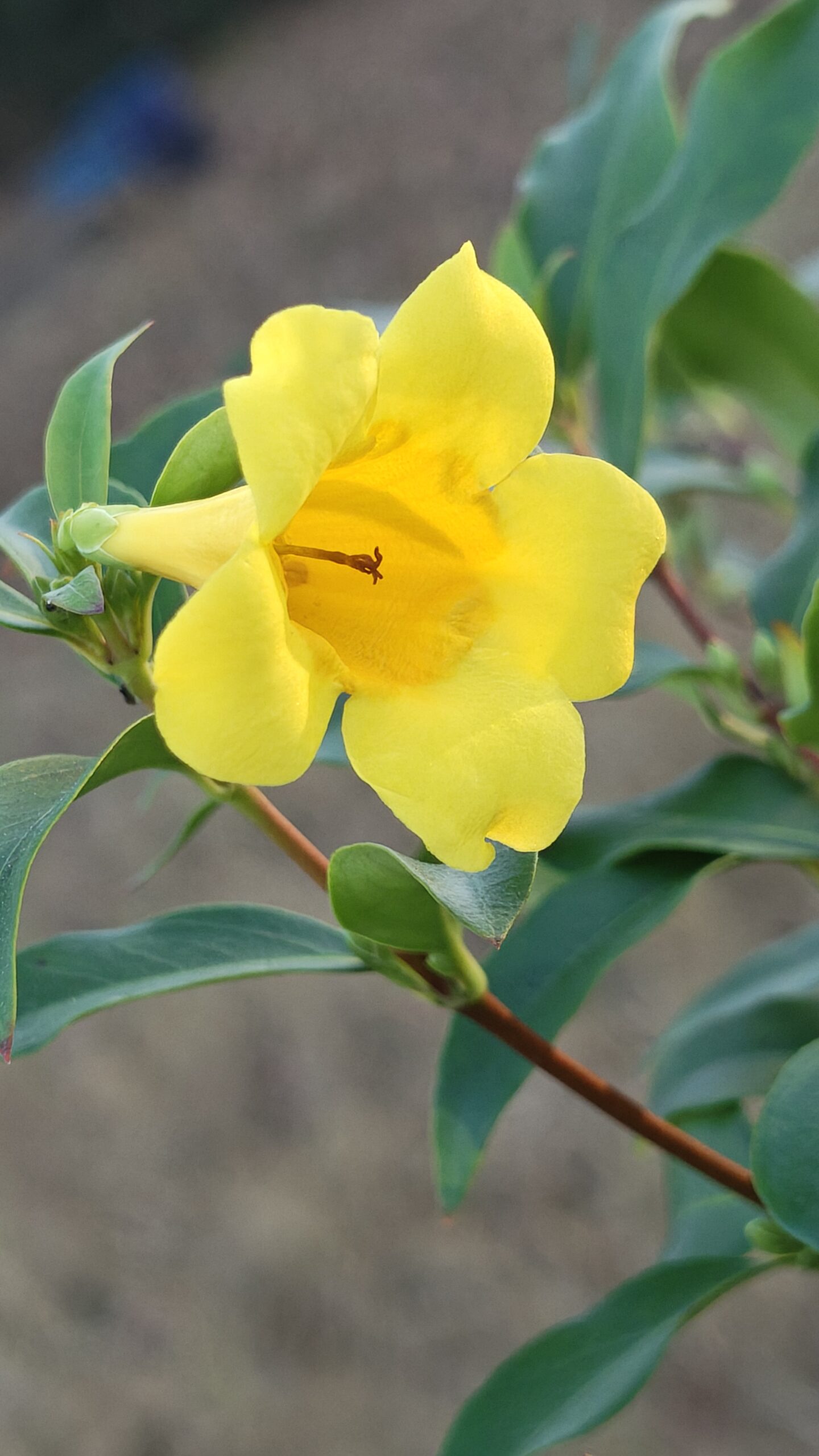
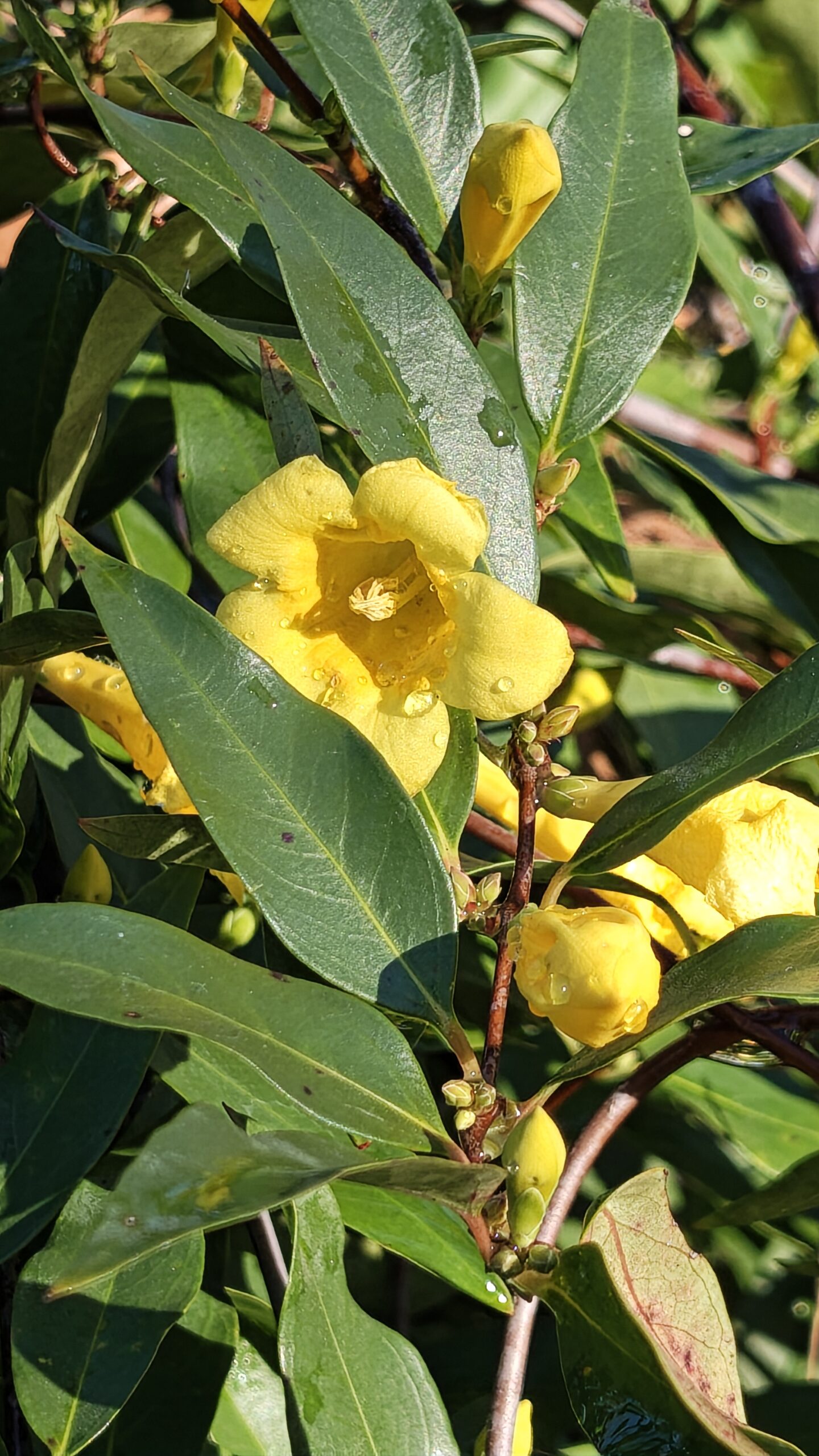
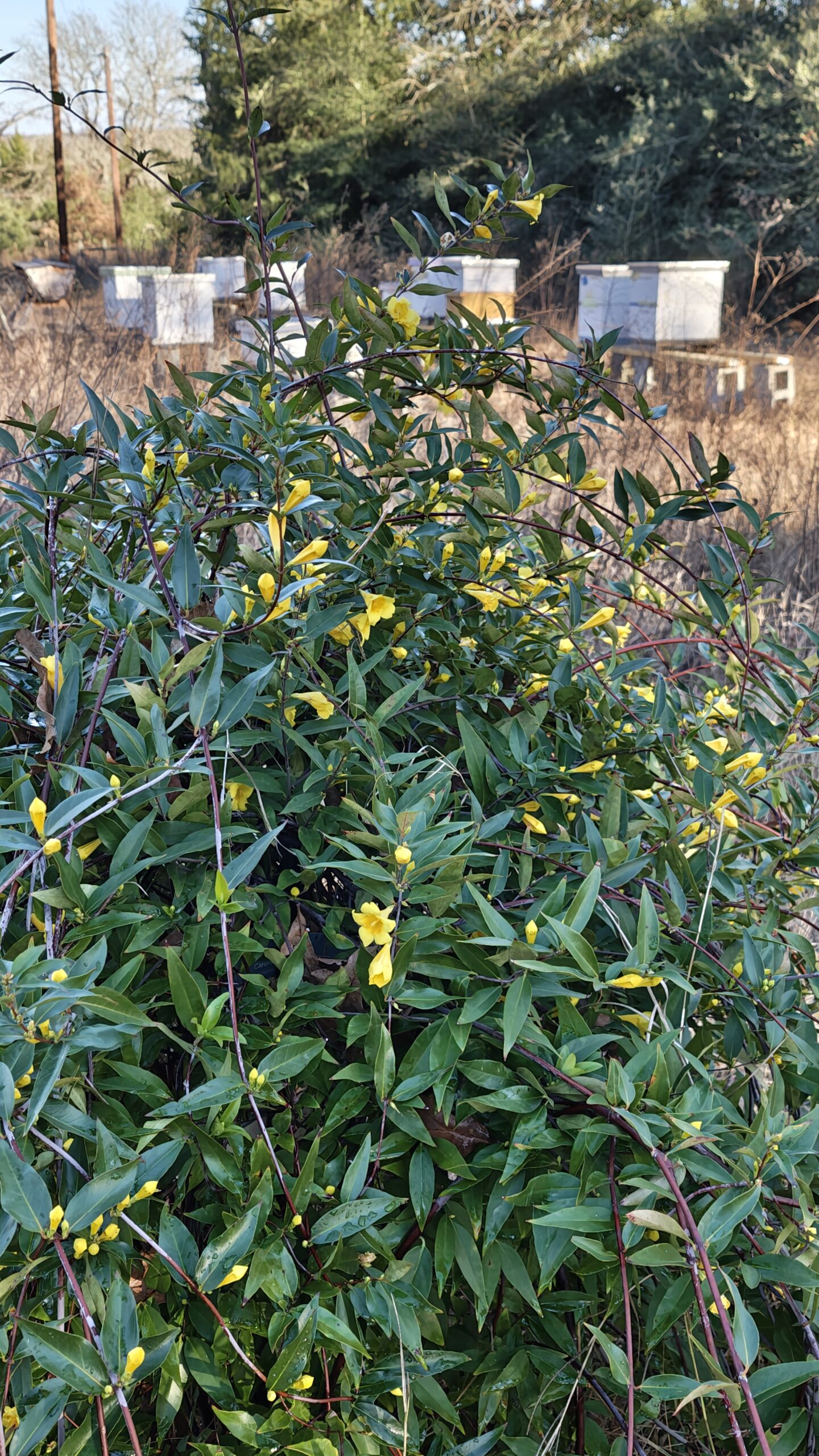
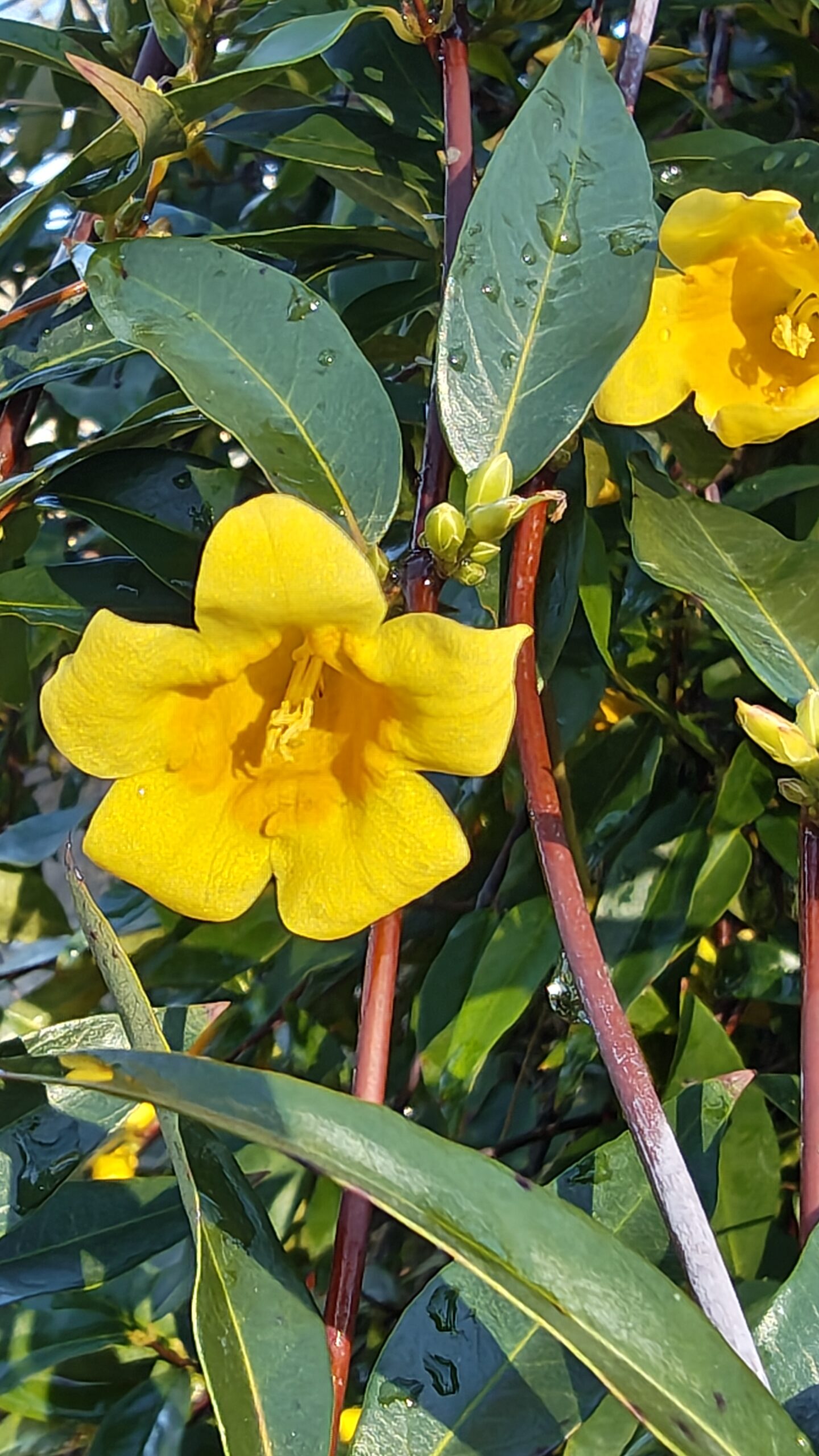
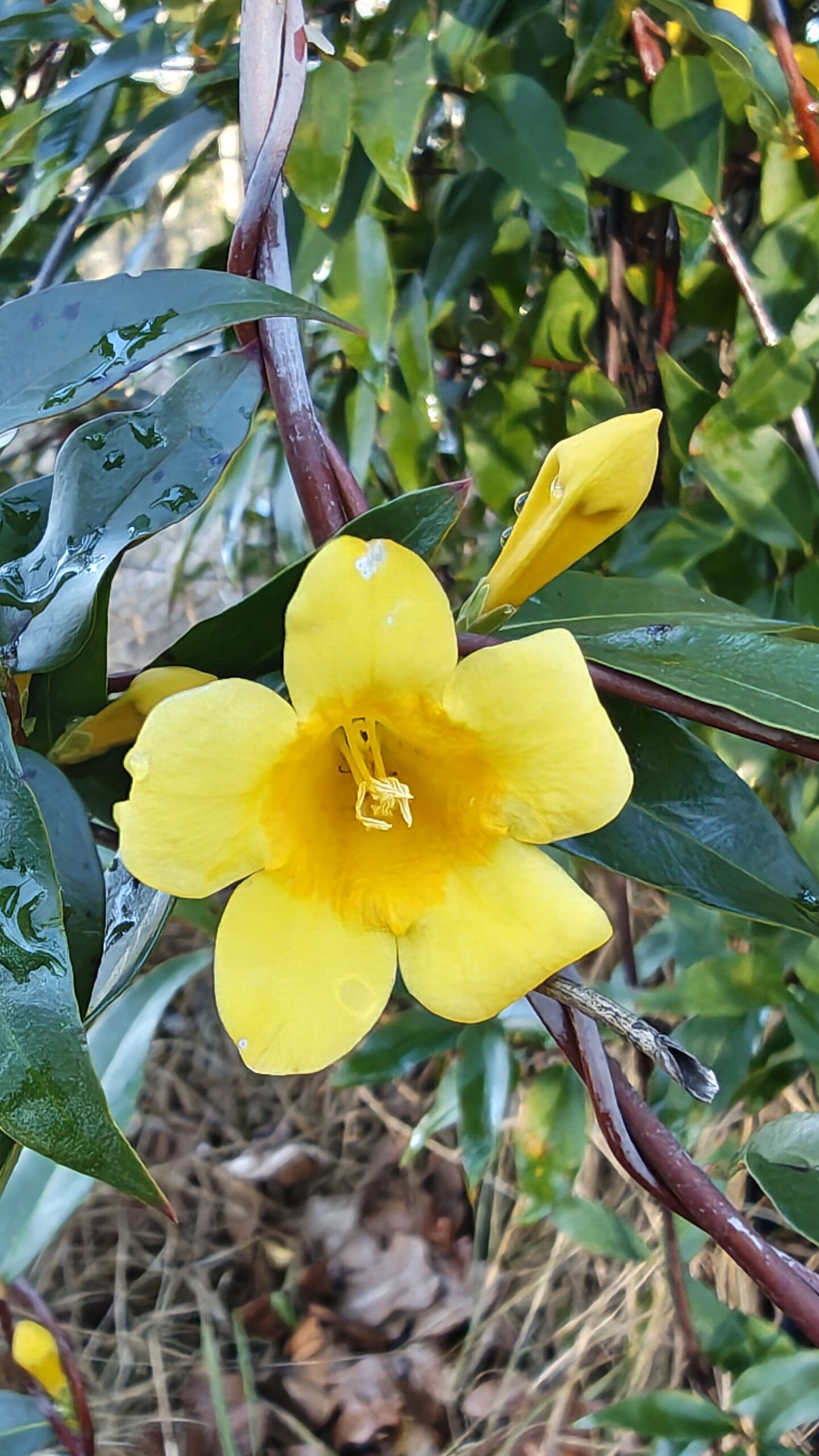
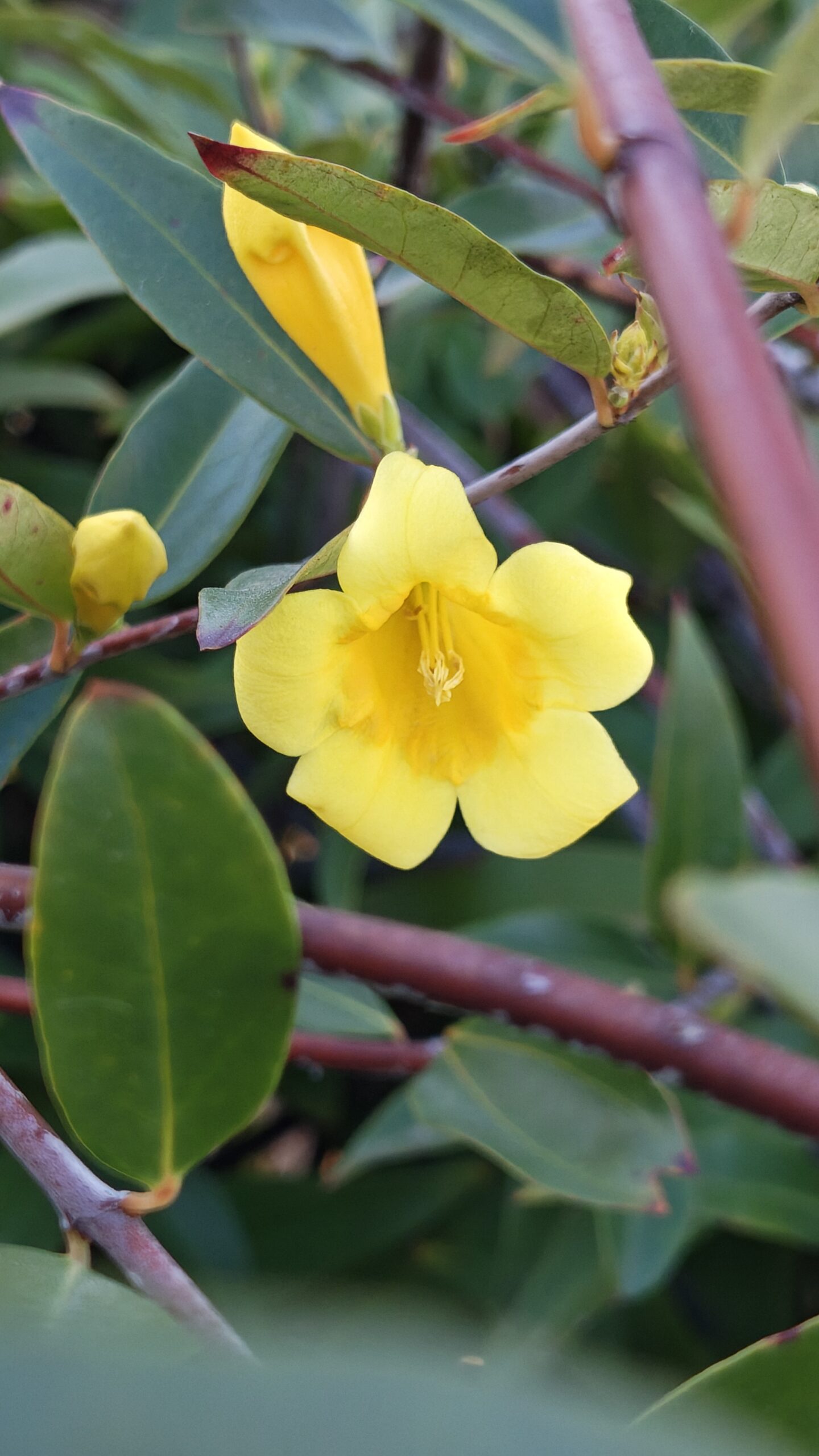
It can grow to 3–6 m (10–20 ft) high when given suitable climbing support in trees, with thin stems. The leaves are evergreen, lanceolate, 5–10 cm (2–4 in) long and 1–1.5 cm (3⁄8–5⁄8 in) broad, and lustrous, dark green. The flowers are borne in clusters, the individual flowers yellow, sometimes with an orange center, trumpet-shaped, 3 cm (1+1⁄4 in) long and 2.5–3 cm (1–1+1⁄4 in) broad. Its flowers are sweetly scented and produce nectar that attracts a range of pollinators.[1]
Growth and Cultivation
Carolina jessamine is best grown in moist, organically rich, well-drained soils in full sun. Although it will tolerate light shade, best flowering and growth occur in sun. It tolerates wind and is moderately tolerant of salt, wet soil or short periods of drought. Carolina jessamine has a modest growth rate until well-established. It may grow from 12 to 20 feet as a twining vine trained to an arbor or trellis after three to four growing seasons. If unsupported, it creates a bushy ground cover. Pruning, which is best done soon after it finishes flowering, is generally only needed for shape and training to its support.[2]
Carolina jessamine can be found in the wild in wooded areas and thickets growing up tree trunks. It can become weedy in disturbed areas and along roadsides. In cultivation, it is well-suited for growing in vertical spaces like trellises, arbors, fences, planters, porch columns, and screens. Use it in pollinator, native, woodland, cottage or rain gardens.[2]
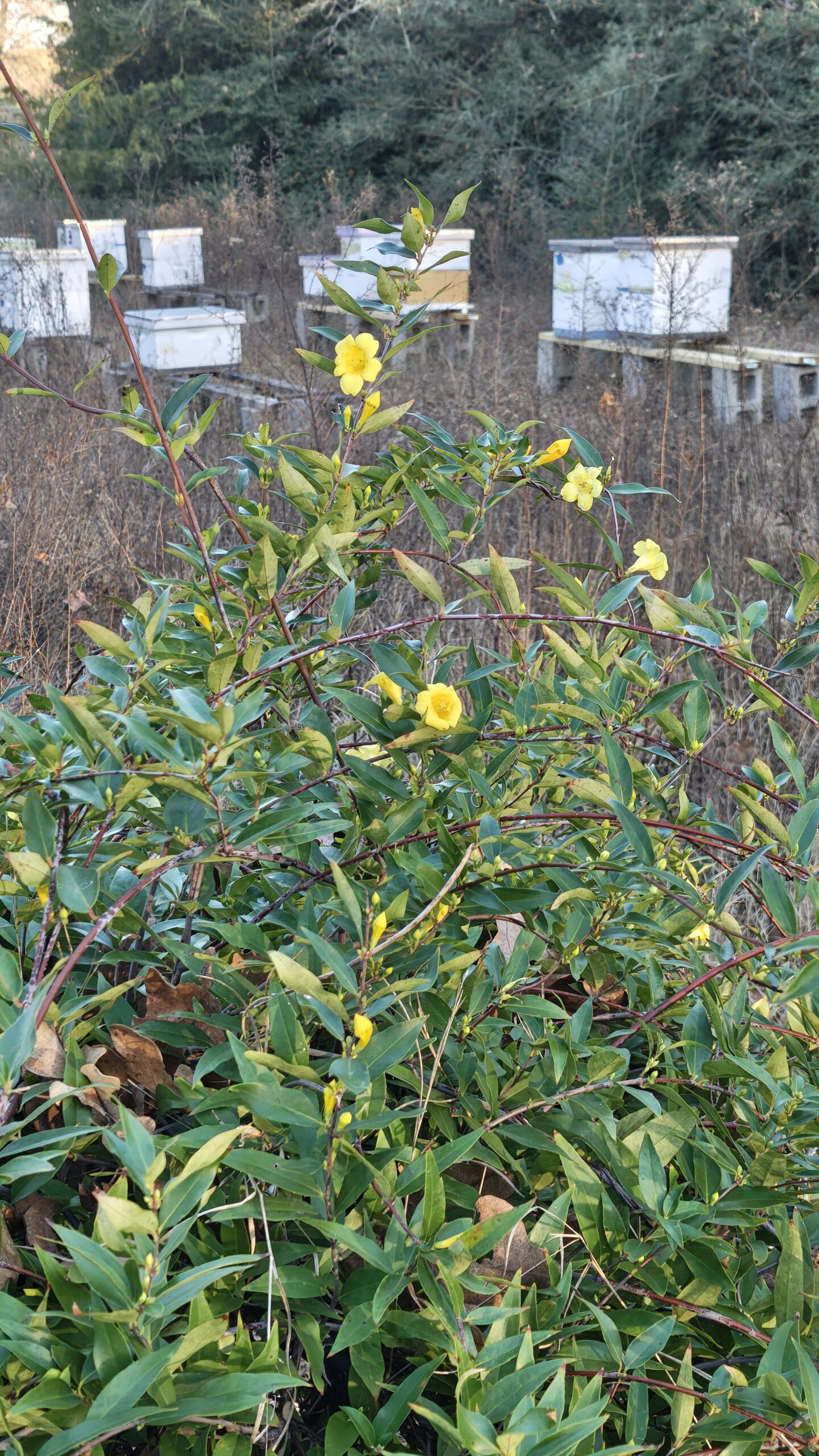
I grow my Carolina jessamine (2 plants) in a very sandy, fairly dry area of the farm, where they get full sun and have to compete with all kinds of wild vegetation and weed. I deep-watered them during Summer once every few days when I first planted them two years ago. But after one growing season, they seem to have established quite well, and I only deep water them once a week during Summer. The perennial vine can flower in Fall, but mine really bloom in Spring (usually February through May). In fact they started blooming in December because of the mild winter we are having. And they actually do okay in the cold, even when temperature dips below freezing for a night or two. Both datura and brugmansia got major cold damages during those cold nights, but Carolina jessamine sustained little to no damage. The foliage generally bronzes in winter.[2]
Toxicity
HIGHLY TOXIC!!!! The entire plant, especially the root, contains indole alkaloids that include gelsemine, gelseminine, gelsedine, gelseverine, gelseminine, and sempervirine.[3][4] Some of these alkaloids have similar effects of strychnine. Gelsemine paralyzes the central nervous system. Because of these neurotoxic alkaloids, G. sempervirens is considered a psychoactive plant, some even consider it a hallucinogen.[4]
Poisoning symptoms include sweating, nausea, muscular weakness, dilated pupils, lowered temperature, convulsions, and respiratory failure.[2] In a serious case of poisoning, it can lead to respiratory paralysis and death.[3] Poisoning usually occurs through ingestion of the plant material.
I am seeing conflicting information regarding Carolina jessamine nectar being toxic to bees, particularly honey bees. Some sources say it is toxic to honey bees and can lead to brood death, but it may be beneficial to bumble bees by reducing pathogen load.[1] Another source says the nectar may become toxic if the honey bees consume too much of it.[5] And according to The Encyclopedia of Psychoactive Plants : Ethnopharmacology and Its Applications, G. sempervirens nectar is not toxic to bees; but when turn into honey, the honey is toxic to humans.[4]
My Carolina jessamines grow near my bee yard (you can see the bee hives in the photos below), but I have never seen the honey bees forage from the flowers, not even in the dead of winter when nothing else is blooming. And I do not see any wildlife munch on the plants either. My cats certainly have no interest in them. So while humans might mistake Carolina jessamine for honeysuckle, I think most animals or bees are smart enough to know not to consume the plant, especially if there are alternative sources of food.
That said, I do not recommend planting Caroline jessamine as a pollinator plant for honey bees. I plant mine as ornamentals, not as pollinator plants, they just happen to be near the bee yard, and the honey bees have plenty of alternative foraging sources.
Use
G. sempervirens has long been used as a medicinal plant by American Indians. The Aztec-speaking peoples of Mexico call it xomil-xihuite, "paralyzing poison." Otomi Indians call it beho-sito, "glass coffin." The root was allegedly used as a poison in trials by ordeal.[4] Other specific use of the plant is rather unclear. Some 19th century sources identified G. sempervirens as a folk remedy for various medical conditions.[1]
In Texas, you can find G. sempervirens at the garden center of a certain local grocery store chain, as well home improvement store nurseries (you might be able to find it at independent nurseries as well). It is sold as a ornamental plant because it is an evergreen, and it blooms beautifully in early Spring. The flowers also emit a sweet fragrance, and the scent can fill the garden when the flowers are in full bloom. It is a lovely sight, for sure; the canary-yellow color just exudes "happiness."
Beside being an attractive ornamental plant, Carolina jessamine also provides shelters for small animals and birds when grown as bushes or hedges. I once found a cardinal nest deep in the center of the bush, hidden well within all the tangles of vines. I watched the mama bird flew in and out of the bush tending to her babies, and the babies grew into fledglings... The nest went empty one day, so I assume the fledglings took off to their new lives.
The Asian species of the Gelsemium genus *, Gelsemium elegans, is a well-known medicinal herb in Traditional Chinese Medicine (TCM). Known commonly as "heartbreak grass" 斷腸草, it has similar appearance of G. sempervirens, and is just as poisonous. According to TCM teachings, G. elegans is said to have the following medicinal properties: Anti-inflammatory, anti-swelling, stagnant blood dispelling, analgesic, parasiticide, insecticide, antipruritic (anti-itch), removing wind, detoxifying, dissipating stasis, dispersing swelling, and relieving pain. It is used to treat various ailments including eczema, tinea corporis, tinea pedis (fungal infection), traumatic injury, fracture, hemorrhoids, scrofula, boils and pyodermas, pretibial ulcer, scabies, leprosy, nerve pains, and rheumatic arthralgia. Use of any Gelsemium species as medicine should be short-termed, and should strictly be under the supervision of trained medical professionals. DO NOT USE OR INGEST THE PLANT unless you know what you are doing, and only do it under the guidance of trained medical professionals.
* There are only three species in the Gelsemium genus: G. sempervirens and G. rankinii are native to North America, and G. elegans is to China and Southeast Asia.[1]
Fun Facts
Yellow jessamine is the state flower of South Carolina.
Despite its common name, the species is not a "true jasmine" and not of the genus Jasminum.
EXTREME FIRE RISK! This plant has an extreme flammability rating and should not be planted within the defensible space of your home. Select plants with a low flammability rating for the sites nearest your home.[2]
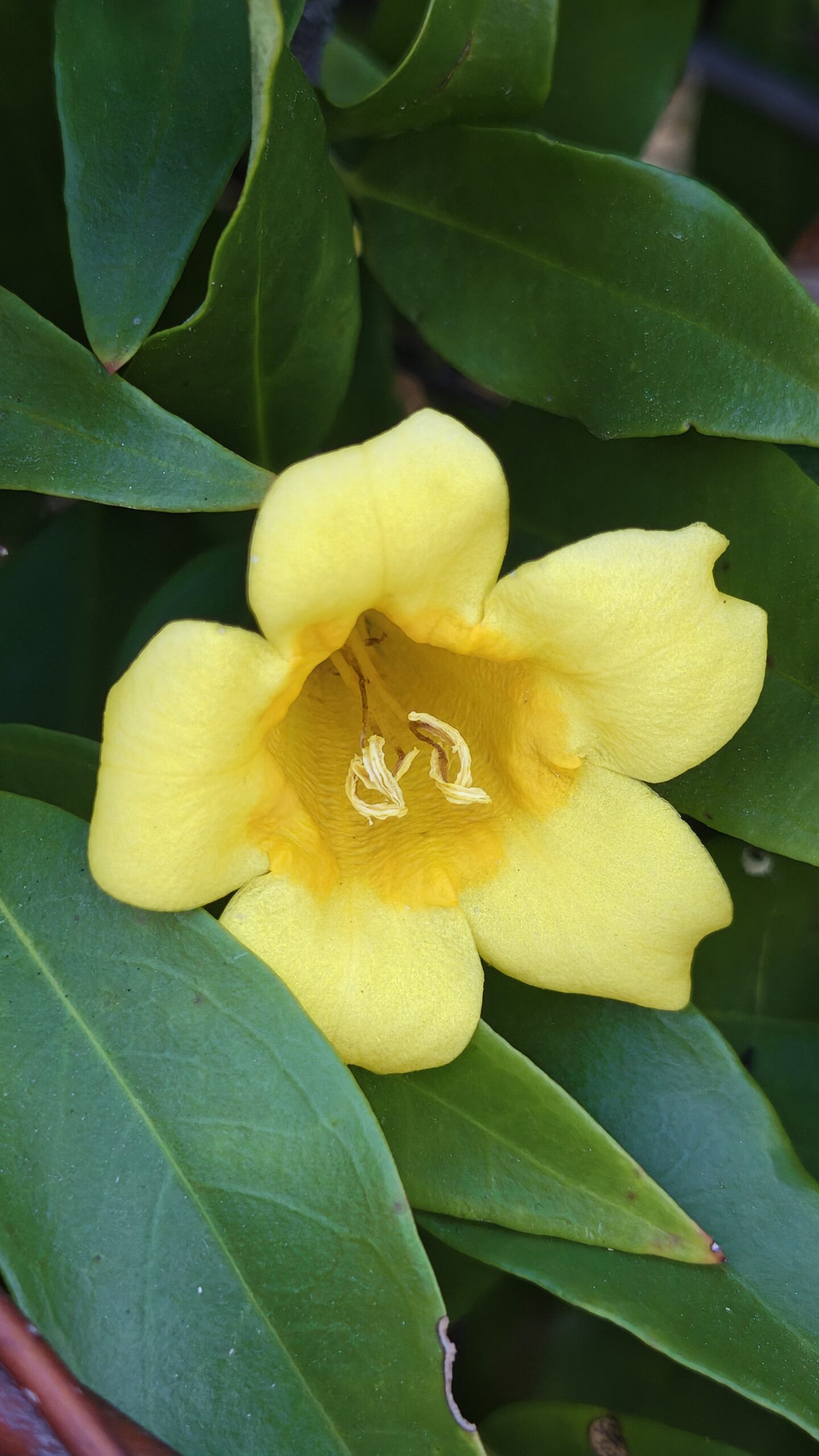
Scientific Classification
Kingdom: Plantae
Order: Gentianales
Family: Gelsemiaceae (It used to be classified under Loganiaceae)
Genus: Gelsemium
Species: G. sempervirens
Bibliography
[1]Wikipedia Contributors, “Gelsemium sempervirens,” Wikipedia, Aug. 17, 2025. https://en.wikipedia.org/wiki/Gelsemium_sempervirens
[2]NC State University, “Gelsemium sempervirens (Carolina Jasmine, Carolina Jessamine, Carolina Yellow Jessamine, Yellow Jessamine),” North Carolina Extension Gardener Plant Toolbox. https://plants.ces.ncsu.edu/plants/gelsemium-sempervirens/
[3]Colorado State University, College of Veterinary Medicine and Biomedical Sciences, “Carolina jessamine, yellow jessamine, evening trumpet vine,” Guide to Poisonous Plants. https://poisonousplants.cvmbs.colostate.edu/plant/120
[4]Rätsch, C., The Encyclopedia of Psychoactive Plants : Ethnopharmacology and Its Applications. Rochester, Vt.: Park Street Press, 2005.
[5]Lady Bird Johnson Wildflower Center , “Gelsemium sempervirens -- Plant Database,” Wildflower.org, 2013. https://www.wildflower.org/plants/result.php?id_plant=gese
Photo Credit: Eimi OstaraMoon / Poison and Bee LLC