五月初五 – 端午節
Dragon Boat Festival, also known as Duanwu Festival or Tuen Ng Festival 端午節, is a traditional Chinese holiday that occurs on the fifth day of the fifth month of the Chinese calendar.
In Hong Kong and China, children learn that it is a holiday to commemorate Qu Yuan 屈原, who was the beloved prime minister of the southern Chinese state of Chu 楚 during the Warring States period 戰國時代 (c. 475 – 221 BC) of the Zhou 周 dynasty (c. 1046 – 256 BC). Qu Yuan was accused of treason and was exiled from the court despite his loyalty to the king and his great love for his state. When the state of Chu was invaded and its capital fell, Qu Yuan committed suicide in despair by throwing himself into the Miluo River 汨羅江. The local people, who deeply admired and respected Qu Yuan, raced out in their boats to save him, or at least to retrieve his body. That was believed to be the origin of dragon boat 龍舟 race. The people also banged on pots and pans to try to scare the fish away from Qu Yuan’s body. This later became the drumming on the dragon boats during the race.

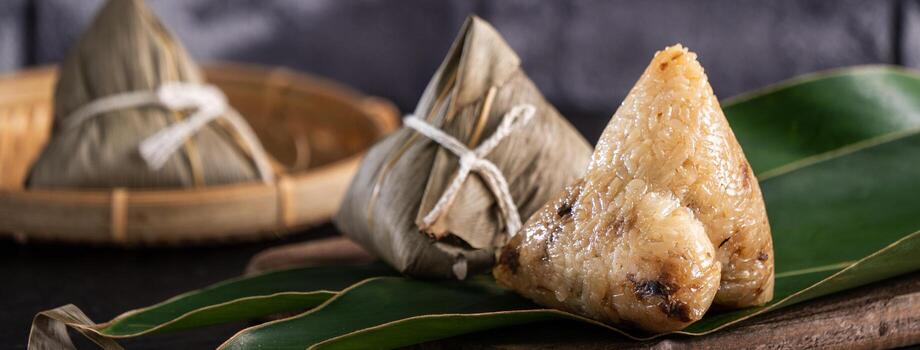
When his body could not be found, the villagers dropped balls of sticky rice, wrapped in lotus leaves, into the river so that the fish would eat them instead of Qu Yuan’s body. This is said to be the origin of zongzi 粽子 – a traditional Chinese rice dish made of steamed glutinous rice stuffed with a range of fillings and wrapped in bamboo or lotus leaves. Fillings can be either sweet, such as red bean paste, or savory, such as pork belly or Chinese sausage.
There is also the theory that the Dragon Boat Festival originated from dragon worship, and zongzi was the food offering for the dragon king. With this theory it makes sense that why the boats people rode on to find Qu Yuan’s body eventually evolved into the dragon shape. People might have hoped that the dragon-shaped boats, as representations of the dragon king, would prevent the fish and river spirits from taking Qu Yuan’s body, because the dragon king was the ruler of rivers, lakes and seas.
The Fifth Day of the Fifth Month – Day of the Five Venoms
However there is a lesser known, older folk practice for the holiday…
In Chinese folk belief, the fifth lunisolar month is considered an unlucky and poisonous month, and the fifth day of the fifth month (五月初五) is particularly du 毒. Du 毒 means “poison” or “toxic” in modern Chinese, but it is also a word to describe something very potent.
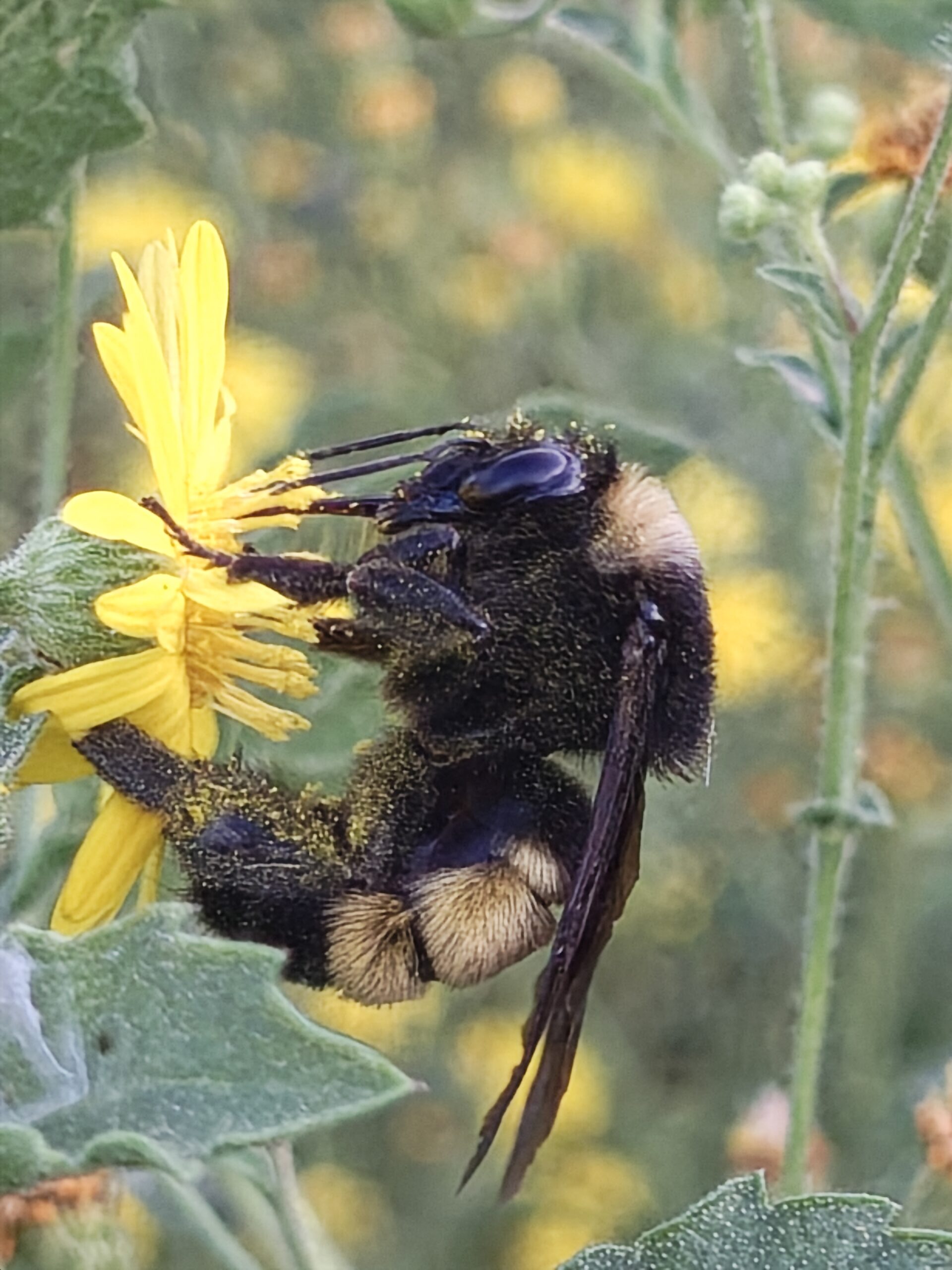
Venomous creatures such as spiders, snakes, centipedes, toads, and scorpions were said to appear starting from the fifth day of the fifth month. People also supposedly got sick easily after this day. You may recognize the creatures mentioned are commonly known as the Five Venoms 五毒. These creatures, sometimes lizards instead of toads, were used in creating potent poison in the art of Gu 蠱 — a form of Chinese black magic. They were also thought to be familiars of witches or sorcerers, and harbingers of evil energy or curses, dispatched by black magic practitioners.
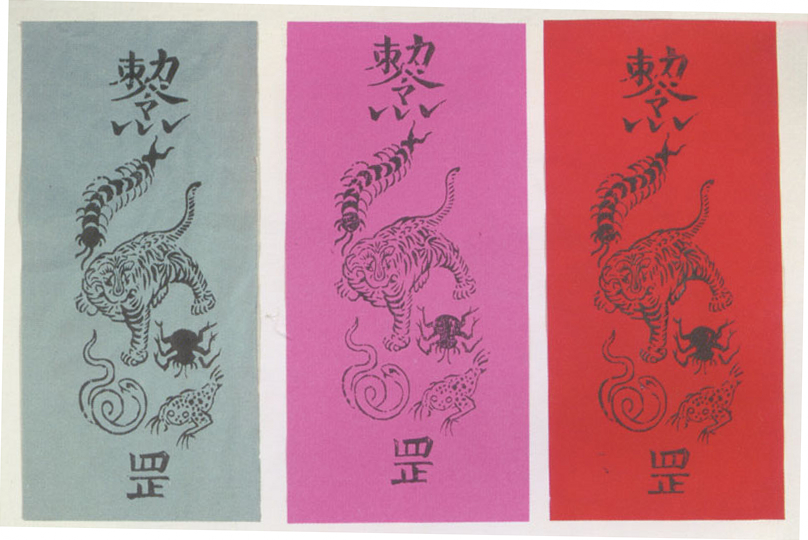
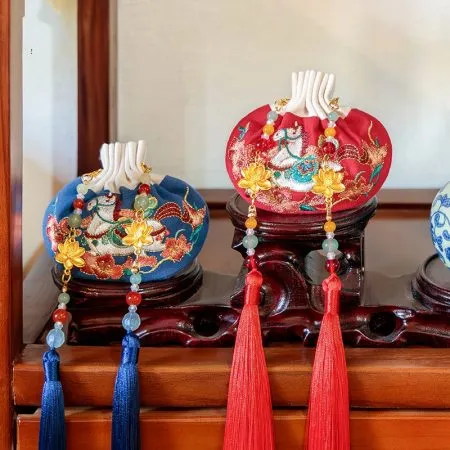
To get rid of the misfortune and to keep the Five Venoms away, people would hang calamus, mugwort, and garlic above doorways on the fifth day of the fifth month. These were believed to help ward off evil by their strong smell and their shape (e.g. calamus leaves are shaped like swords.) People would also put pictures of the venomous creatures on the wall and stick needles in them. Children would wear talismans drawn with the Five Venoms, as well as scented sachets stuffed with Chinese mugwort 艾草 and calamus 菖蒲 (and other fragrant herbs).
In the early 20th century the Dragon Boat Festival was observed from the first to the fifth days of the fifth month, and was also known as the Festival of Five Poisonous/Venomous Insects 毒蟲節.
The Science Behind the Folklore
Why is the Fifth Day of the Fifth Month 五月初五 thought to be unlucky or toxic? Legend has it that Qu Yuan, the beloved prime minister, committed suicide on the fifth day of the fifth month. Much like how Friday the 13th became “unlucky” because of its alleged connection to Jesus’ Last Supper or the arrest of the Knights Templar, the belief of Fifth Day of the Fifth Month being unlucky became a superstition among Chinese people. Especially if you consider Qu Yuan faced incredible injustice prior to his exile, being framed and slandered by other corrupt ministers, there is a sense of great injustice linked to Qu Yuan’s death. In Chinese folk beliefs, those who died harboring grievance could turn into vengeful ghosts; the greater the grievance, the more vengeful the spirit. While there is no reason to believe that Qu Yuan had turned into a vengeful spirit, his family name Qu 屈 became synonymous to “wrong(ed)” or “injustice” in contemporary Chinese language.
Scientifically speaking, the fifth day of the fifth month in the Chinese lunisolar calendar usually lands on some time between late May to mid June in the Gregorian calendar (exact date varies). That is late spring for most of the North Hemisphere, when flora and fauna are growing rapidly; creatures known to spread diseases are coming out in droves — mosquitoes, ticks, mice, rats, cockroaches, flies, etc. Warmer temperatures also means things rot more easily, while germs grow and spread more rapidly. It is understandable why people seem to get sick more easily during this time period. Before modern science and the understanding that germs cause diseases, ancient Chinese people thought illness was caused by black magic or curses, delivered by the Five Venoms. They thought the yang 陽 energy could fuel pestilence, and the Fifth Day of the Fifth Month is considered to be the day of peak yang 陽 energy.
Aromatic herbs hung on doorways, many of them natural vermin repellents, also possess antimicrobial, antibacterial and antiviral properties. They cleansed the air, and helped keep vermin and germs at bay. The scented sachets worn by children worked as natural bug repellents to keep biting insects away, which also prevented the children from getting insect-borne diseases.
Chiron Moving into Taurus
In the Year of the Fire Horse, the fifth day of fifth month is also when Chiron moves into Taurus. As Chiron enters Taurus, we begin a new cycle of working through the tough stuff — especially in our relationships with our bodies, our material resources, and the natural world — and learning as much as possible in the process.
As I already mentioned, the fifth day of the fifth month is considered to have peak yang 陽 energy… One of the meanings of duan 端 means “apex”; wǔ 午 means “noon” and sounds the same as the number 5 in Mandarin Chinese wǔ 五. The number 5 is connected to the 5 elements of nature (Earth, Water, Fire, Air, and Ether).
This year’s Fifth Day of Fifth Month is also very closed to Summer Solstice, which is 夏至 in Chinese. The Chinese characters literally mean “summer arrives” – more heat, more sun, more yang 陽 energy!
There is a lot of sunny, positive energy (yang 陽 means “sun”, “solar” and “positive”) surrounding this transition of Chiron from fiery Aries into earthy Taurus… How will you take advantage of this to make the best out of Chiron transitioning into Taurus?
Whatever you do, have a zongzi today and watch a dragon boat race to celebrate the occasion! And if you can, hang or plant calamus (Acorus calamus) and mugwort above your window or doorways. I have a mini calamus and mugwort garden outside my bedroom window to keep pestilence away.

If you are interested in learning more about the art of gu 蠱 and poison in Chinese culture and history, check out my workshop-on-demand, Yi Du Gong Du 以毒攻毒 – Poison in Chinese Medicine, Alchemy, and Magic, where I explore the relationship between Chinese people and poison. We will take a look at the meaning of “poison” in linguistic and cultural context. We will also examine the roles that poisons play in Traditional Chinese Medicine, Chinese alchemy, and Daoist sorcery as well as folk magic.
If you are a member of Poison and Bee’s Ko-fi cohort, you can get this workshop, plus many others, for free.
Sources:
— Wei, Liming (2010). Chinese Festivals: Traditions, Customs and Rituals (Second ed.). Beijing. pp. 36–43. ISBN 9787508516936.
— Stepanchuk, Carol (1991). Mooncakes and Hungry Ghosts: Festivals of China. San Francisco: China Books & Periodicals. pp. 41–50. ISBN 0-8351-2481-9.
— SCMP.” Earthquake and floods make for the muted festival. Retrieved on 9 June 2008. Archived 25 June 2012 at the Wayback Machine
— “Your Guide to Chiron in Taurus”, https://www.chani.com/blogs/your-guide-to-chiron-in-taurus