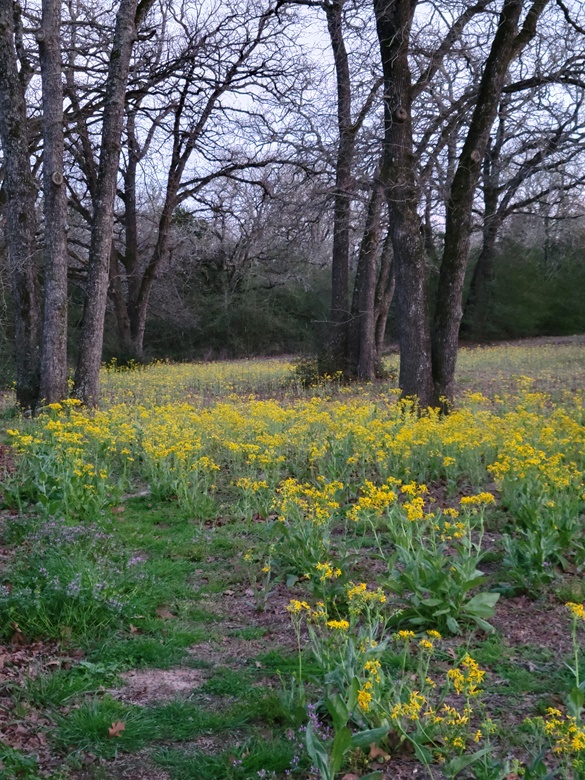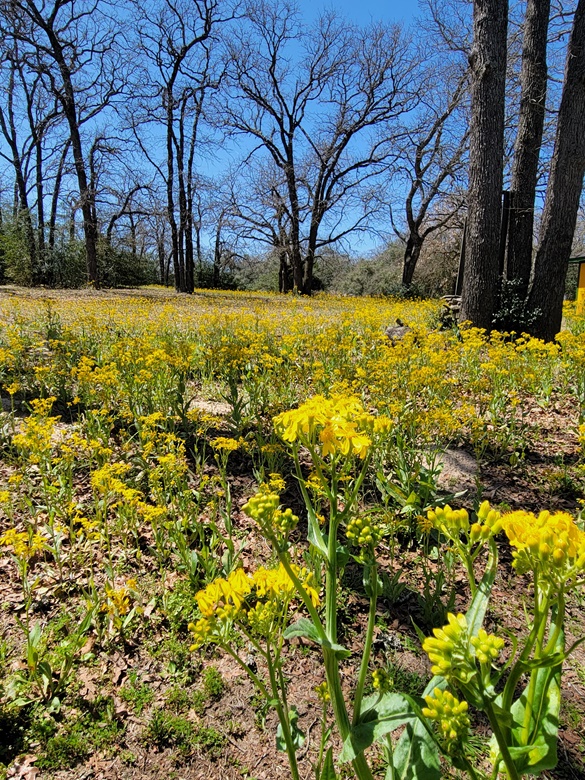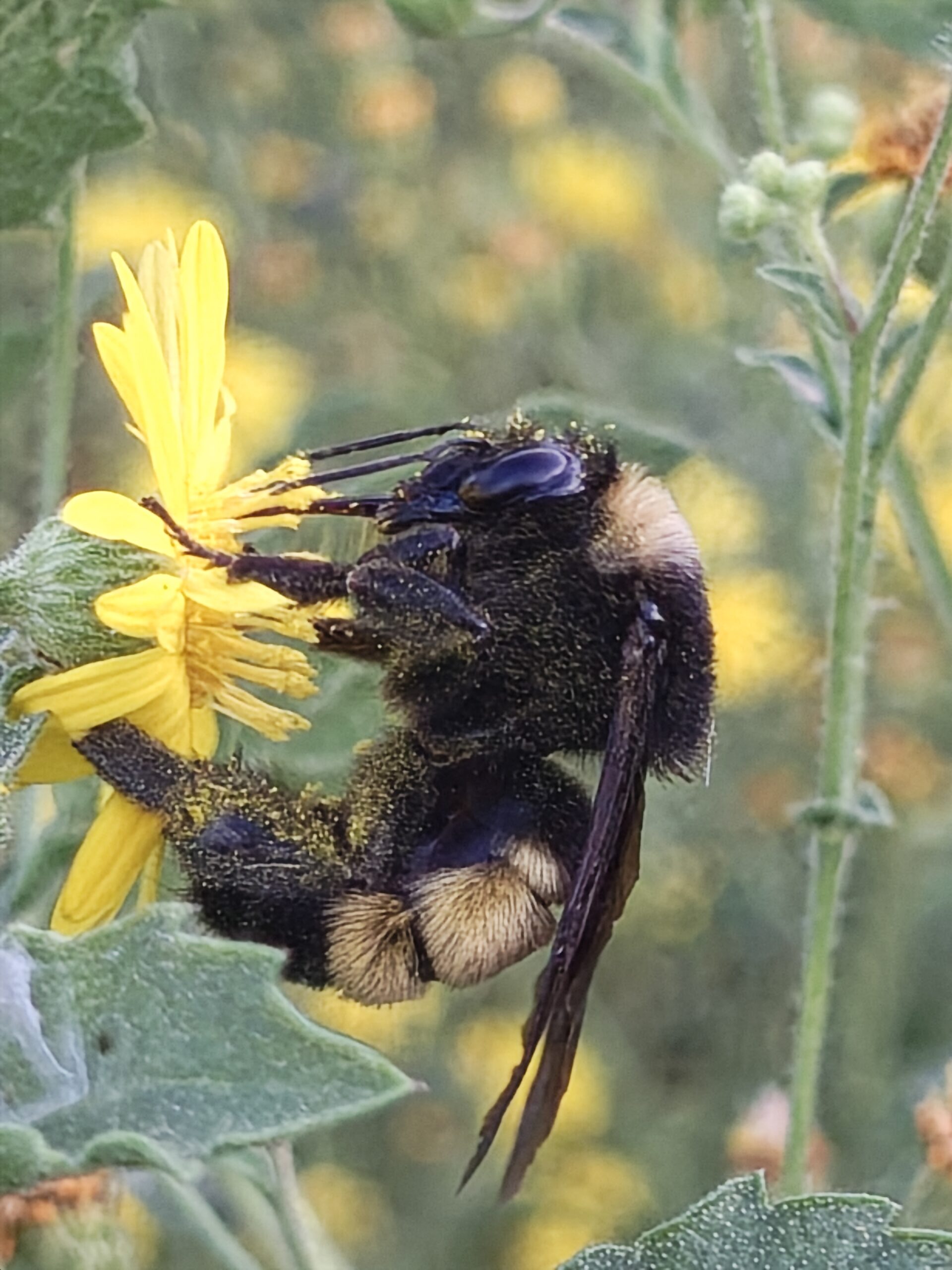
Texas Ragwort, Senecio ampullaceus, is an annual from the Asteraceae family that you will find covering all the pastures in Central Texas during springtime. It has fuzzy leaves with purple underside that I mistook as mullein when I first encountered it. The flowers give off a heady (thick) sweet scent that attracts pollinators. I don’t know how much nectar my bees get from Texas Ragwort, but I do see the girls foraging on the flowers, and I see bright yellow/orange colored pollen being brought into hive. Texas Ragwort is also called Texas groundsel or Texas squaw-weed.
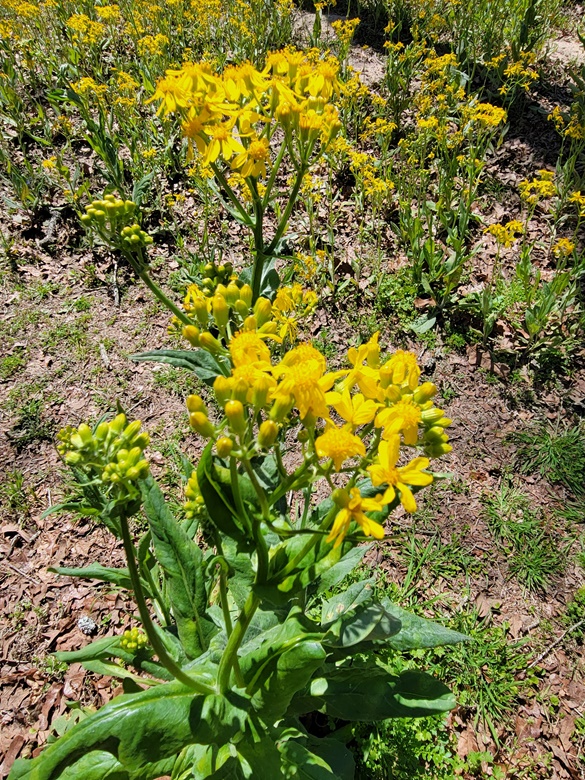
Members of the genus Senecio can be toxic to livestock, but the toxic agent of these plants has not been established. Cattle consuming Texas groundsel have developed clinical signs that appeared several months after it was ingested and the plants had been dead for quite a while. Dead animals had classical liver cirrhosis identical to that produced by pyrrolizidine alkaloids.
While not technically a baneful herb, but with its potentially deadly toxic effect, I find it fitting to see fields of Texas Ragwort surrounding my poison garden (I don’t have livestock to worry about, and the farm cats, chickens or dogs don’t eat this stuff).