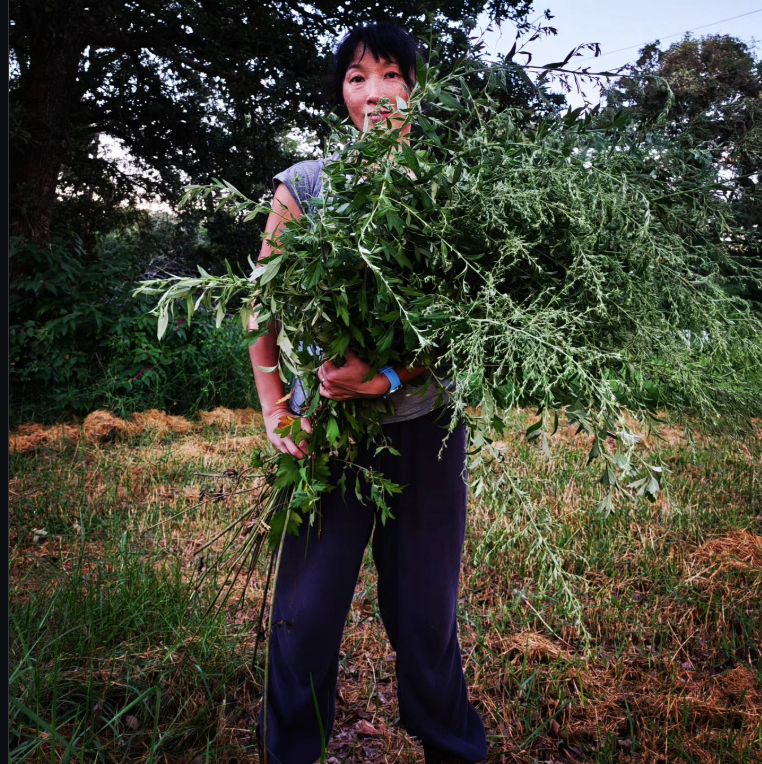
When I first planted yomogi, also known as Japanese mugwort (Artemisia princeps), I completely underestimated her vigor and her adaptability to Texas weather and poor soil… Today I harvested about 1/3 of what’s growing, and this is after I already thinned out the growth a few times earlier this year!
Although she’s also part of the Artemisia family and bears the name “mugwort”, yomogi doesn’t seem to have the same psychoactive properties like her cousins common mugwort (Artemisia vulgaris) or wormwood (Artemisia absinthium). Yomogi is nonetheless an important herb in East Asian cultures. She is commonly used as a culinary herb in Japan and Korea, and is medicinally used in moxibustion. There are Japanese skincare products that use yomogi as an antioxidant and anti-inflammatory ingredient. Yomogi leaves are said to contain Vitamins A, B1, B2, and C, as well as minerals like iron, calcium, and phosphorus. Other skincare benefits include moisturizing soothing and healing properties.
You can also burn dried yomogi as cleansing incense, much like how you burn common mugwort or wormwood.